
Being off school for the summer, I wish I had more time to read the things I want to, but unfortunately I have mostly been consuming history books and an assortment of other books for my education. However, I thought I would use this space to update on some of the things I have read of my own volition with my thoughts on them. I’m fairly impressed with myself; each of these books are pretty long, one was a sequel which I have been putting off for a year and the other was a classic, which is always intimidating. We have a range of ratings, but I am happy to say I enjoyed each book to a certain degree.
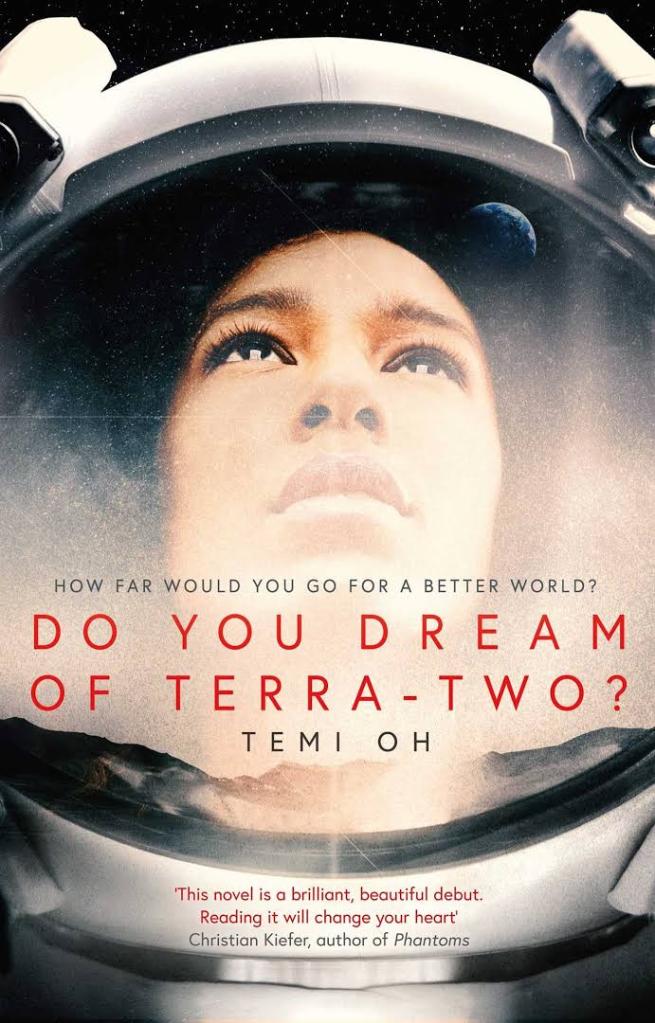
Do You Dream of Terra Two by Temi Oh (★★★★★)
This book consumed me from the moment I began reading the first page at midnight one night, not sure what to expect from a book I’d picked up on a whim from the library, and now it might possibly be my favourite book of the year so far. Do You Dream of Terra Two is the riveting story of six young people selected to go to space on a 23 year long mission to colonise the first known ‘earth-like’, Terra Two, and while it is heavy on the science (at least for me, and my poor, English Literature focused brain), it is also quite introspective, examining the lives of each of these characters all experiencing such a unique situation in very different ways. Part of the reason that I loved this book, I think, is that space itself is so fascinating, horrifying and absolutely unknown, and it scares me. The thought of leaving earth forever, being stuck in the vast emptiness of space in a fairly fragile ship for 23 years fills me with terror, but the exploration of why these characters made this decision, their inner turmoil, and finally their reactions, is what makes this book so strong.
Our six main characters are all compelling, but for me vary in how much I enjoyed their personalities, as with most multiple perspective books. However, I think Oh is very skilled in maintaining the reader’s interest in every chapter, even if they don’t necessarily appeal to you. Each character is orientated around a particular dream or desire (other than Harry really, who I felt was given less attention in general and was probably both the least likeable and flattest of them all). We see those dreams/ideals blossom and/or fester as they spend time with only each other, able to pursue their individual opinions alone and therefore to the extreme, leading to the tense climax of the novel where the characters have to either rally together or fall apart. My personal favourite character was Juno, whose motivations I found the most interesting to examine. She struggles often with going to space, really wanting only to follow her sister, Astrid, who is the most imaginative and idealistic of the crew. There is Poppy, who doesn’t realise what she is leaving behind until it is too late. Jesse, who’s role I will leave ambiguous to avoid spoilers, but who feels both inferior and superior to other members of the crew. Elliot, who spirals into a dark place during the course of the novel. And then Harry, who I mentioned before, the epitome of the poster boy, who I actively disliked, even though all the characters are certainly flawed. (I think this book has YA crossover appeal, but the characters’ being unchallenged in their flaws pulls it more into the adult category). Like I said before, I think that Temi Oh does a fantastic job with these characters, though I would love to see a sequel, and I think there is so much more room to learn about them.
There are interesting themes raised in this book, and whilst Temi Oh retains the feeling of reality, there is every now and then the unanswered question of something darker happening, and they raise the issues of expendability, patriotism and the performative nature of space missions, rather than any real purpose. Mental illness is also present as a theme, especially out of the high stress educational environment, the lack of care extended to the young people other than to present them as icons to the world, and the effective abandonment of them once they leave earth’s atmosphere. At the same time we see the fears of climate change and global warming, the potential necessity of mass off world colonisation. I think these two opposing themes working in tandem demonstrate the author’s skill. Meanwhile the story itself is also filled with a fulfilling plot, romance/desperate relationships, ‘space danger’ and emotion, all carefully crafted by Temi Oh’s sleek, elegant writing style.
This book is simultaneously incredibly readable, tense, chilling, complex, emotional and thought provoking. I cannot recommend it enough, and though it is a pretty long book, I think it barely scratched the surface of what can be done with these characters (in the absolute best way). I wish I could read more in this series, but at the same time I think the effectiveness of this glimpse into this mission is unparalleled. Temi Oh is such a talented author and this book deserves so much recognition. If you love books about early space exploration, this is an absolute must read. And even if you don’t love sci-fi, if you love books about people, I still think this book will be worth your time.
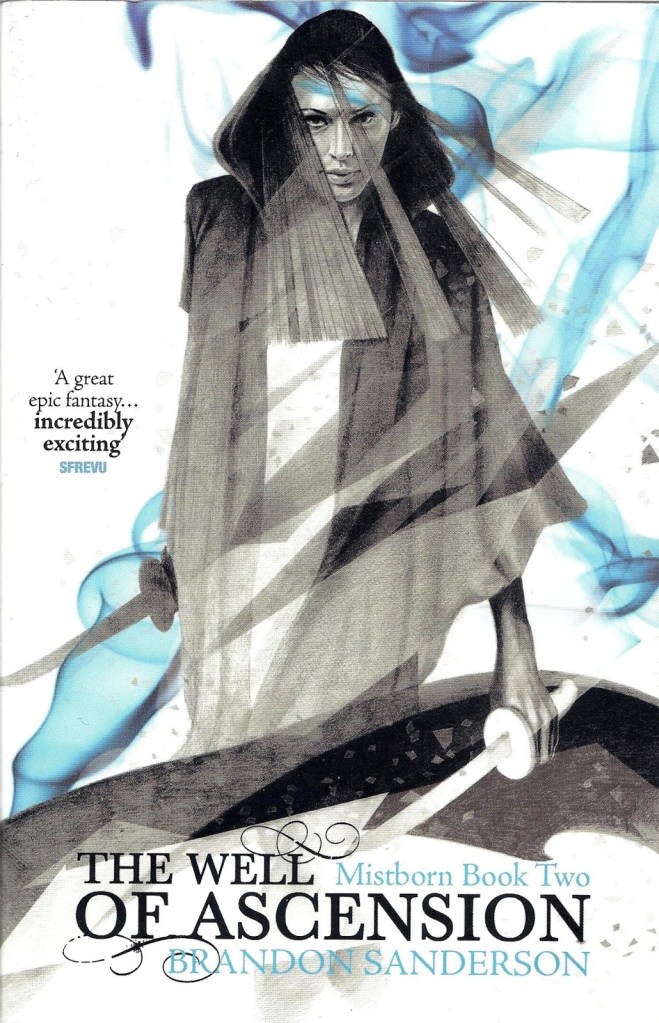
The Well of Ascension by Brandon Sanderson (★★★★)
Why are sequels nearly always weaker than their predecessor? For me, it comes down to two reasons:
1: I like to understand the structure of a world. Typically, my favourite type of world is one with strict systems and mechanisms which makes it interesting to learn about. However, at the end of the first book in a series, there is often the ‘revolution’ whereby that system is thrown into chaos in a lot of heavy action and frankly awesome pacing. We end the first book on that high, but if the author cannot replace the intrigue of this original world with the new system, as WELL as maintaining that high from the ending of the first book, it immediately begins to fall flat.
2: I am so over romantic relationships falling apart after book one because of a lack of communication and over all obstinacy on the parts of the characters. It becomes repetitive, frustrating, and often leads to major bad things happen all because two people lacked the guts to talk to each other.
Unfortunately, The Well of Ascension perpetuates both these problems. It suffers from being too long in its beginning – I read the first 200 pages and then put it aside for weeks because nothing captured my attention – and thus giving itself too much room to add unnecessary conflict. We open (or near enough) with one of Brandon Sanderson’s fantastically written action scenes, compelling as ever, and then it all disappears, leaving me with slow political manoeuvring and wondering why on earth anyone thought that Elend was the best and only option for a ruler, him being utterly random, fairly incompetent, and disliked by everyone. This part of the book was also the most heavily crammed with the unnecessary sexism that went unchallenged. I feel like Brandon Sanderson really tried, but it just wasn’t it. From Elend being bamboozled that Vin could have multiple personality traits as a woman, to Tindwyl implying that being protected by his female lover is embarrassing for a king, to the gender roles that keep getting brought up, with an attempt at challenging them that doesn’t quite work. Sometimes I felt okay about it, but a lot of times I just wish it had been left out, simply perpetuating the out dated idea that a strong woman has to take on masculine traits. Again, Vin does try to challenge this by finding strength even in more “feminine” pursuits, but it does often just end with her putting other women down for their differing priorities. Then there is the whole problem of misconstrued interactions between Elend and Vin shaped into “they don’t love me, therefore I should leave” etc that was just so irritating.
Though I have said a lot of negative things about this book, most of my criticism lies within the first 200 or so pages (and for a 750 page book, that is the minority). Once this book hit the 300 page mark, it really took off, both in terms of pacing and characterisation, and the finale was utterly breathtaking; I literally cannot wait to read The Hero of Ages. Vin is just such a badass, her skill in the action scenes is such a pleasure to read, and the plotting and pacing of the final reveals were just the best. Some of the new characters introduced were also interesting to follow: Zane, particularly, but also Allrienne. I hope that she especially is featured more, because I really liked what I saw of her. And Sanderson really knows how to execute an epic battle scene is all I can say. The ending itself is worthy of five stars. And I feel like the flaws of the characters truly came to the surface in this book, as well as their greatest strengths, and while I definitely haven’t been the biggest fan of Elend, I will say that he has become less aggravating to me. (Though I am frustrated at some of the lessons Tindwyl tried to instil in him throughout this book. It is one thing to be regal and commanding, and another to completely desensitise oneself from humility and the needs of the people around them. I mean, I have literally no knowledge of how to be a monarch but still, I felt while Elend may have needed an attitude adjustment, his values and morals were already good, and I am glad he maintained his integrity despite the urging of others). I am so excited to see Vin and Elend in the next book, and I hope their relationship remains stable and isn’t causing half of the conflict.
The true epicness of this series has really become apparent in this book; this series really moves on from the heist narrative it had in The Final Empire. I feel I could have loved this one even more had the beginning not dragged so. I truly fell in love with the latter half though, and was able to consume the last 350 pages in one day. While Sanderson’s writing may still falter here and there, his characters, action, magic systems and world-building are so strong, and hold up this novel. I am so excited to continue reading his works and watch his universe of novels expand. Though I will be sad to leave this trilogy behind, I eagerly anticipate the beginning of the next eras of Mistborn to come.
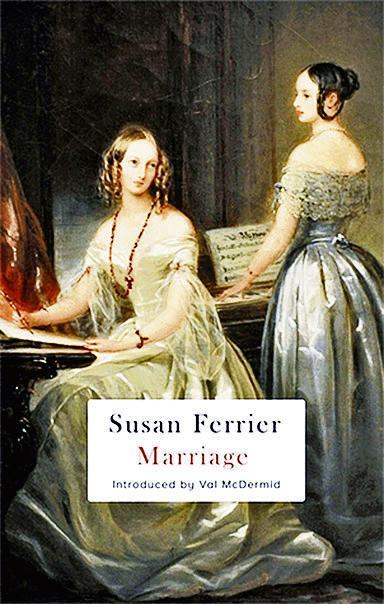
Marriage by Susan Ferrier (★★★.5)
The reading experience of this book can only be described as pleasant. Mild. Enjoyable. Pleasurable and easy to read, but does nothing particularly revolutionary for me. In my quest to recreate an experience similar to reading Jane Austen, Susan Ferrier was the first author I have tried whose name is often mentioned in tandem. I think this book perhaps develops to be a little more like Austen in the latter half, and occasionally we see a similar wit shining through, but I don’t think generally their writing styles align, and its a disservice to compare this story, and Ferrier’s far broader, sweeping writing style, to something it is not. That being said, I definitely preferred the second half of the story to the first, where the melodramatic style tapered off and the characters became far more likeable. And ultimately I was just so surprised by how easy and fun it was to read this book – if you are looking for non-heavy going classics, this is one I would definitely recommend.
The book is structured strangely – for a third of the book we follow a character (Lady Juliana) that the story isn’t really about. It is akin to a long detailed prologue to the story of our true heroine, Mary Douglas, Lady Juliana’s daughter. While the first portion is easy to read and immersed in the best atmospheric setting of Scottish landscape, it is made truly insufferable by the character of Lady Juliana, who is selfish, naive, frustrating, melodramatic, entitled – name a bad quality and it is likely she will fulfil it. Indeed, she is intended to be like this, but I did not like reading about her and this long ‘prologue’ to Mary’s story could definitely have been shorted. The writing at this point felt very dramatic also, many exclamation points scattered here and there, and though it felt ironic at times, it was a little grating. Luckily, as mentioned before, this becomes less so as the book progressed. Reading a little into the context of this novel I learned that originally Ferrier worked on the novel with her friend, who wanted the novel to be more in the gothic style. Perhaps this early style is the remnants of that working relationship, or maybe just an effect of Lady Juliana’s character which seeps into the writing style.
As we moved into Mary’s lifetime, I was worried that she was going to be another character of the irritating kind, only this time the bland, good, nice character, but in this I was pleasantly surprised. While she is good, she has a sense of humour and is willing to laugh at her own desire to follow the rules, and for that I really liked her. And thus I enjoyed her portion of the novel a lot more. Though the characters originally felt very ‘stock’ character-like, the second half introduces a lot more interesting, flawed characters, including my personal favourite, the icon herself, Lady Emily. Lady Emily is the character that felt the most like a real person to me (because though Mary may be sufferable in her goodness, she still feels like a character), and she has the best lines in the book, filled with scathing sarcasm. Though she can be a little self centred, I loved her relationship with Mary. And what is also interesting about Lady Emily is that she kind of defies some of the ideas that Susan Ferrier presents in this novel about education. For Ferrier, it seems that the effects of poor education are damning, yet for Lady Emily she contains some core goodness which allows her to transcend the teachings of Lady Juliana. I liked this a lot – that Ferrier pointed out how the effect of poor education can be very situational. One might marry for money and be happy, or one might be miserable. The real problem is what drives people to make these decisions – namely, a lack of education (particularly female). Throughout a lot of the book is brought up the question of what a valuable education entails, whether that is accomplishments, skills, morals, all, none. And we see the effect of one woman’s poor, neglected education have an effect through her family line, as she, never given any role model as a mother, is expected to then act as a mother to both her children and the children of her brother, who she in turn neglects, and those children suffer.
Whilst this story felt on the placid side, there was still a lot I gained from it, and I’m really glad that I got to read it. I only wish that more of Susan Ferrier’s novels were in print/easy to find, because her writing is so pleasurable to read and I am so interested to see what else she has written. This novel grew on me slowly, gradually warming up, until I left it with a feeling of fondness for its contents. It is also so fascinating to me how some books simply are forgotten and lost to time; this book is hard to find and almost unknown in popular literature, and yet Ferrier outsold Austen in her day. I think this novel is still worthy of notice and certainly deserved the recognition it received in its time, and I would definitely recommend it to any reader of classic literature.
Those are the books I have read and reviewed this summer (there are others, but I didn’t have enough thoughts to fully review them as here). I hope that in these last few months you’ve also been able to find some new favourite books, or feel you have achieved something in the books that you’ve read – I certainly have. (I certainly feel a sense of accomplishment knowing I have also finished a 600 page book about Henry VI). Happy reading!

 The Bookish Courtier